Wondering what kind of home you’ll actually find in McFarland once you start touring? That is a smart question, because this market is not defined by just one look, one lot size, or one price point. If you are trying to decide between an older ranch, a split-level, a newer two-story, or a home with more yard, this guide will help you understand what shows up in McFarland and what those differences can mean for your budget, upkeep, and day-to-day living. Let’s dive in.
McFarland’s housing stock feels mixed because it is mixed. Village planning documents describe neighborhoods of different ages and character, with about 70% of households in single-family homes and an ongoing focus on maintaining older housing while also adding a wider range of housing types.
That variety shows up clearly in current and recent listings. You may tour older ranches and raised ranches, split-level homes, newer two-story layouts in newer subdivisions, and established homes on larger lots. For buyers, that means your search should start with how you want to live, not just with bedroom count.
Ranches are one of the more common formats you are likely to see in McFarland. Recent examples include homes from the late 1970s and 1980s with features like main-level living, fenced yards, and lower levels that add rec space, storage, or room to spread out.
That layout can work well if you want easier day-to-day living on the main floor. At the same time, many of these homes are older, so you may need to look closely at updates such as flooring, roof age, insulation, windows, and mechanical systems.
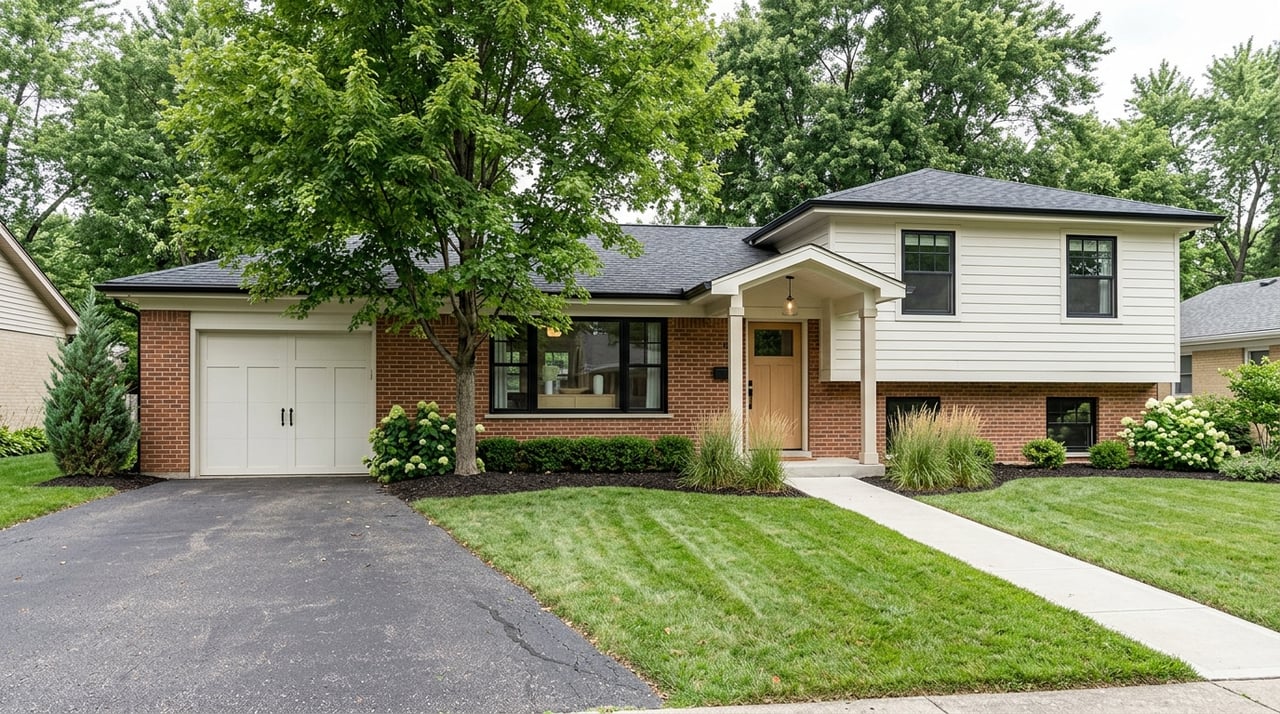
Split-level and split-entry homes are another format buyers may encounter. A recent example on Cook Street included three bedrooms on the main level, a large eat-in kitchen, and a lower-level family room with extra bedroom or office space.
These homes can offer flexible square footage without the footprint of a large two-story. But condition can vary widely, so it is especially important to understand maintenance history, basement conditions, and whether the home has been updated over time.
If you prefer a more current floor plan, newer two-story homes in McFarland often lean toward open main living areas with bedrooms upstairs. A recent Juniper Ridge listing from 2020 featured four bedrooms upstairs, a flex room, bright open living space, and an unfinished lower level for future expansion.
That pattern also shows up in current new construction. Recent Rosewood Drive listings included new homes on lots around 5,227 to 5,662 square feet, with pricing from about $459,900 to $509,900 and efficient 3-bedroom, 2-bath layouts.
McFarland also offers some established homes on larger sites. A Rustic Way example sat on a half-acre lot and paired the extra yard with features like hardwood floors, fireplaces, and a bonus room over the garage.
This kind of property can feel very different from a newer subdivision home. You may gain more outdoor space and mature landscaping, but you may also take on an older home with a wider range of update history and maintenance needs.
In McFarland, lot size can matter almost as much as square footage. Recent new construction examples were priced in the upper $400,000s to low $500,000s on lots of roughly 0.12 to 0.13 acres, while a larger-lot established home on about half an acre carried a much higher estimated value.
That does not mean bigger is always better. It means you should think carefully about how you want to use the property and how much exterior upkeep fits your lifestyle.
Newer subdivision lots are typically more compact. In practice, that often means a more efficient site plan, less yard work, and a home designed around modern interior flow.
Village planning also supports smaller lots in certain conservation-style neighborhoods, while emphasizing quality design, setbacks, and connected streets and trails. If you value a newer layout and lower exterior maintenance, a smaller lot may be a plus rather than a compromise.
Established neighborhoods often include quarter-acre to half-acre lots. These homes may offer more distance from neighbors, mature trees or landscaping, and more options for patios, play areas, gardening, or simply open yard space.
The tradeoff is that more land usually means more upkeep. You may also be buying an older home where updates have happened in stages over many years instead of all at once.
When buyers compare homes in McFarland, layout can shape daily life more than the exterior style. A ranch may give you easy main-floor living and a large lower level, while a split-level can create separation between living zones. A newer two-story may offer the open kitchen and living area many buyers want, with bedrooms grouped upstairs.
Try to picture how you actually live. Do you want most of your daily routine on one level, or do you prefer more separation between sleeping and entertaining spaces? Do you need flex space for an office, hobbies, guests, or future finishing potential in the lower level?
In McFarland, style is only part of the story. Condition often plays a major role in pricing and buyer appeal, especially in older homes.
Recent listings regularly highlighted updates like new roofs, newer mechanicals, replacement windows, added insulation, updated kitchens, and refreshed finishes. That tells you what buyers in this market are paying attention to.
If you are buying an older ranch, raised ranch, split-level, or established two-story, pay close attention to:
These details can affect both your immediate budget and your long-term comfort. A home with strong bones and key system updates may offer better value than a home with stylish finishes but major deferred maintenance.
With newer construction, the checklist shifts a bit. You may be looking less at age-related repairs and more at what is included today versus what may need to be added later.
For example, some newer McFarland homes feature unfinished lower levels, so it is worth understanding how much usable space you have now and what future finishing might cost. In some communities, you may also want to account for HOA fees as part of your monthly ownership picture.
McFarland is not the lowest-priced option in Dane County, and that shapes buyer expectations. In Redfin’s March 2026 snapshot, McFarland’s median sale price was $534,900, above several nearby markets including Dane County overall at $469,000, Madison at $451,000, and Middleton at $417,000.
At the same time, market reports show a fairly tight but varied pricing band depending on the source. Zillow reported an average home value of $485,872 as of March 31, 2026, while Realtor.com’s April 2026 snapshot showed a median listing price of $454,450 and a median sold price of $454,950.
The key takeaway is simple: McFarland homes do not move on square footage alone. Price can reflect lot size, age, updates, neighborhood setting, lower-level finish, and how modern the layout feels.
If you are buying in McFarland, it helps to rank your priorities before you fall in love with a specific house. Start with the features that matter most to your everyday life and your comfort level with maintenance.
A simple way to frame your search is to choose which tradeoffs feel right for you:
This approach can keep your search focused in a market where housing options are varied and each style comes with its own strengths.
McFarland is the kind of market where details matter. Two homes with similar bedroom counts can offer very different experiences depending on lot size, neighborhood pattern, lower-level finish, update history, and overall layout.
That is where experienced local guidance can make your search smoother. We help buyers look past surface features and compare homes based on how they actually function, what future costs may look like, and which tradeoffs best fit your goals.
If you are planning a move in McFarland, Lessing Real Estate can help you evaluate styles, lots, and layouts with clear local insight and white-glove support from start to finish.
7633 Ganser Way Suite 101 Madison, WI 53719
7633 Ganser Way Suite 101 Madison, WI 53719