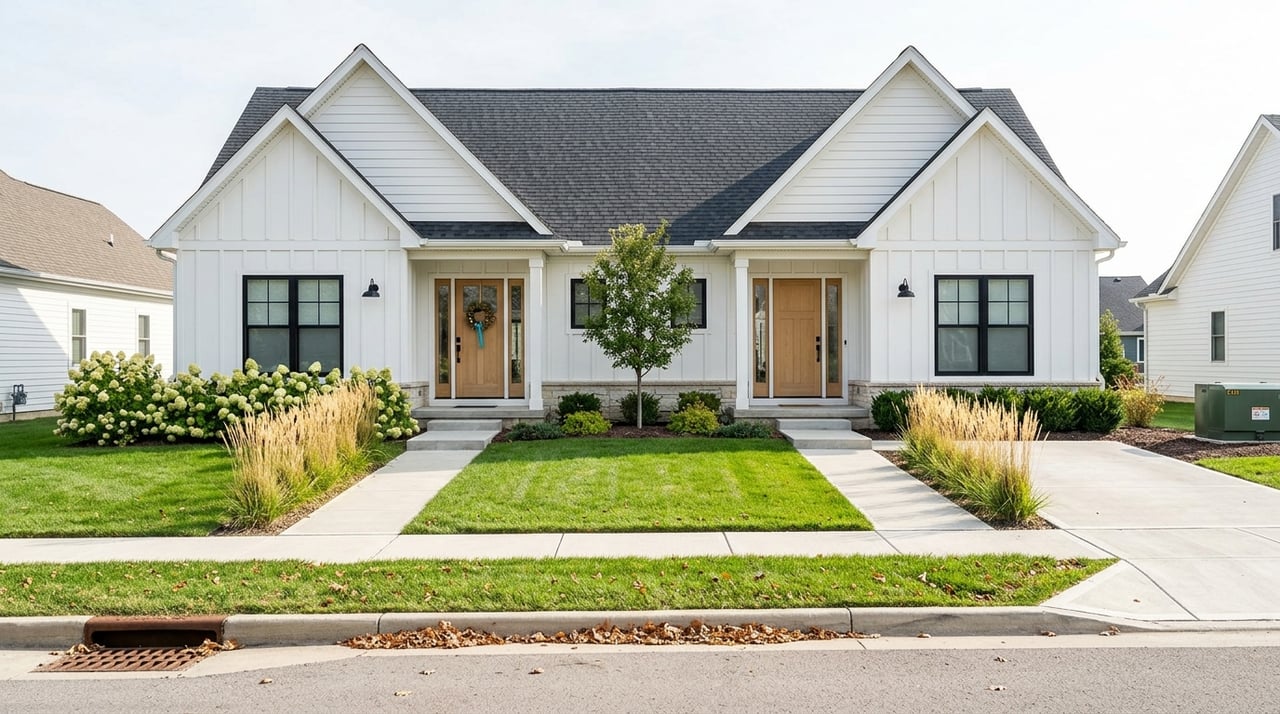
Thinking about a duplex, townhome row, or a small subdivision in Cottage Grove? The right parcel can make or break your numbers, your timeline, and your approvals. You want a clear, local checklist that helps you separate workable sites from costly dead ends. In this guide, you’ll learn how to quickly evaluate land in Cottage Grove for small developments using local rules, service area requirements, utility capacity, fees, and market fit. Let’s dive in.
Your first filter is zoning. Cottage Grove’s zoning ordinance sets allowed product types and maximum gross densities. For small residential projects, common districts include SR-4 at 4 dwelling units per acre, TR-8 at 8 du per acre for two-family, and MR-10 or MR-12 at 10 to 12 du per acre for multifamily. Use the ordinance to confirm use, density, setbacks, parking, and landscape surface ratios before you sketch a site plan. See the zoning text in Chapter 325 for details and bulk standards in the Village code. Review the district summaries and standards in the Zoning Ordinance text to confirm fit for your parcel.
If the parcel is zoned RH or sits in the Town rather than inside the Village, expect a rezoning and likely annexation if you need municipal sewer. Many mixed or nonstandard concepts use a Planned Unit Development to align product type and layout with Village goals. PUDs and rezonings require Plan Commission review, public notice, and Village Board action. You can find the process framework and submittal path in Planned Unit Development and related rezoning procedures.
For projects that need municipal utilities, two maps matter as much as zoning. Your parcel must be inside the Village boundary and within both the Urban Service Area and the MMSD service area for sewered development. If you are outside either boundary, plan on an annexation and a USA amendment, which take calendar months and interagency coordination. The Capital Area Regional Planning Commission posts the service area framework at CARPC Urban Service Areas.
Capacity is the other practical gate. Cottage Grove’s wastewater system collects locally and pumps to MMSD, and the 2022 Utility Master Plan breaks the system into interceptor segments with estimated capacities. Before you option a site, request a written Will-Serve or Capacity letter for both sanitary sewer and water from Village Utilities. Review the system narrative and segment details in the Village Utility Master Plan. For contacts and coordination, start with Village Public Works & Utilities.
Your land division method shapes both cost and schedule. Small lot splits usually proceed by Certified Survey Map, while multi-lot projects need preliminary and final plats plus public improvements like streets, utilities, and stormwater controls. The standards, applications, and improvement requirements are in Chapter 274, which you can review at Subdivision of Land ordinance.
If your site fronts a state highway, build WisDOT access review into your plan early. Driveway and road connections require state permits, and spacing or sight distance can limit entry points. WisDOT warns that if a subdivision records without state review, access permits may be denied afterward. Read the guidance at WisDOT subdivisions and access management.
Timelines vary by site. Inside the Village with available capacity, a smaller CSM or plat can often record in a few months once engineering is complete and escrows are posted. If you need a USA amendment and annexation, plan for a longer path that can span two or more quarters, coordinated with design.
Your pro forma should reflect both construction costs and Village fee structures. Cottage Grove publishes fixed and volumetric utility charges. As of early 2025 examples in Village materials, residential sewer volume was listed as 9.45 dollars per 1,000 gallons and water tiers began around 4.81 dollars per 1,000 gallons for the first 4,000 gallons. Always confirm the current schedule at Village Rates and Charges.
Impact and connection fees can materially change your per unit land cost. In early 2026, Cottage Grove was updating its water and sewer impact fees and evaluating a public safety impact fee, with hearings on repealing and recreating Chapter 198. Verify the adopted ordinance and fees with Village staff before final underwriting. Track updates at Village Impact Fees.
Environmental corridors, wetlands, and floodplain can reduce your net developable acreage and can introduce additional review steps. CARPC and the Village comprehensive plan map these features, and corridors often frame stormwater design and open space. For background on how environmental corridors factor into regional planning, see the CARPC materials in the CARPC meeting packet on environmental corridors.
Cottage Grove relies on groundwater wells, and wellhead protection areas can add restrictions near supply infrastructure. Plan for a wetlands delineation, a floodplain check, and a basic geotechnical review early. These steps help confirm infiltration feasibility, trenching assumptions, and whether any septic is viable for unsewered scenarios. For building and permit submittal references, visit Village Public Works & Utilities and coordinate with staff.
Cottage Grove shows steady interest in small-lot single-family, duplex, and townhome products, but monthly sales counts are small, which makes absorption noisy from month to month. Late 2025 to early 2026 snapshots placed the Village’s median sale price roughly in the 400,000 to 440,000 dollar range, which is a useful directional check when you model price points. Product fit and commuter access to Madison often matter more than squeezing out maximum theoretical density. For competitive context, follow Plan Commission agendas to see pending plats and PUD requests, and pair that with local agent insights on unit-type absorption.
Use this fast, repeatable flow for a 1 to 2 page feasibility read on any candidate parcel:
Small developments in Cottage Grove can be both feasible and resilient when you anchor your plan to zoning, service areas, utility capacity, and realistic absorption. If you want a second set of local eyes on a parcel or pro forma, we are here to help with site sourcing, early screening, and coordination with Village staff. Reach out to Lessing Real Estate to talk through your goals and build a confident path forward.
7633 Ganser Way Suite 101 Madison, WI 53719
7633 Ganser Way Suite 101 Madison, WI 53719