Ask anyone driving through McFarland for the first time what defines the place in July and August, and they'll probably point at Lake Waubesa. The Green Lantern's dock lights, McDaniel Park's shoreline, the nearly mile-long boardwalk that carries bikers out toward Madison. That's the postcard. It's also not where most of the village actually gathers on a given week.
The recurring, planned, come-back-every-time events of a McFarland summer happen inland, at a gazebo surrounded by brick paths, on a patch of ground the Village of McFarland's own planning calendar keeps circling back to. Understanding why tells you more about how this village actually functions than any lake view does.
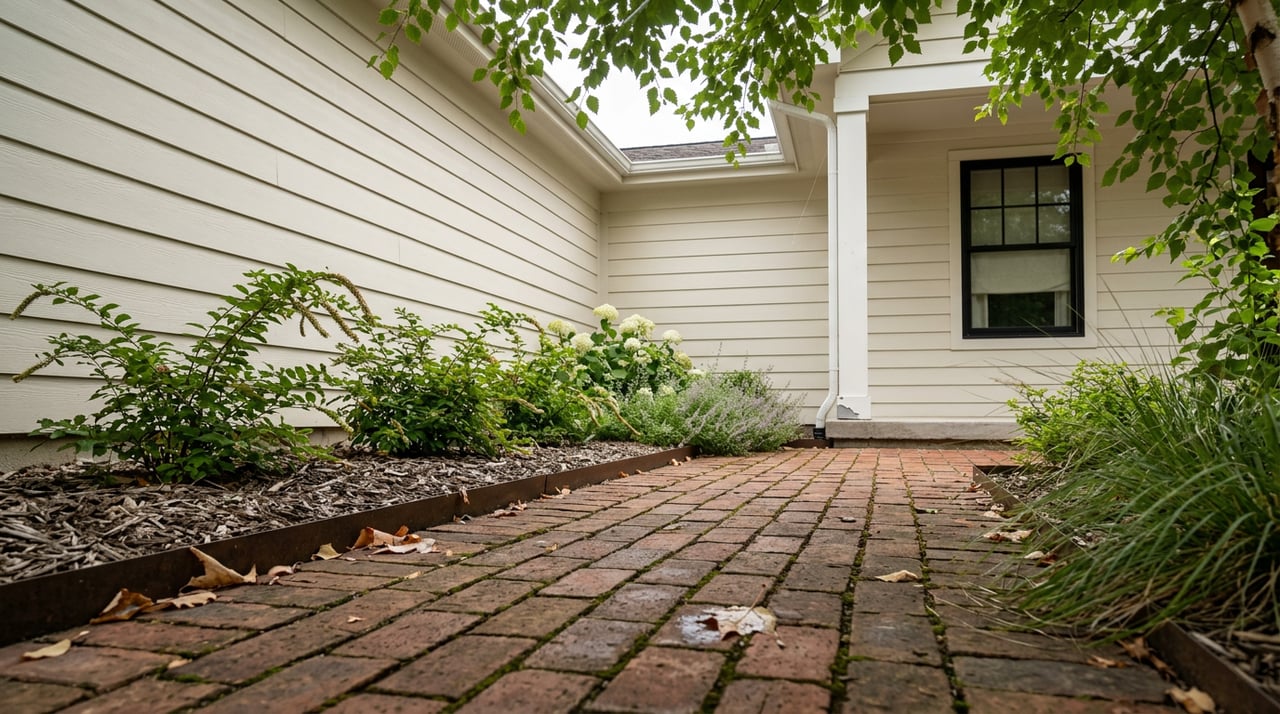
Arnold Larson Park sits close enough to the E.D. Locke Public Library and the Municipal Center that residents can walk to all three in the time it takes to find lake parking on a summer weekend. That geography is why the McFarland Lions Club picked it for Food Truck Frenzy, the free-to-attend gathering the club runs on the third Wednesday of the month, five to seven in the evening, June through September.
It's a fundraiser first. Proceeds go toward the Lions Club's youth programs, food pantry support, vision care initiatives, and veteran services, which means the food trucks lining up around the park's brick pathways are doing double duty as a community night out and a quiet mechanism for funding services most residents never see directly. The park itself was built for exactly this kind of use: benches along the paths, a drinking fountain with a dog-height spout, a bike path cutting through the back, and a shelter you can reserve online if you want to claim ground for a group. The one thing you can't do is stake anything into it, tents included, which tells you the village is protecting the lawn for foot traffic rather than semi-permanent setups.
Here's the part that doesn't show up in a typical roundup of local events. Earlier this year, the Village of McFarland's own website was still listing a public information meeting specifically about the future of Arnold Larson Park alongside William McFarland Park, the ballfield-and-soccer complex on Marsh Road that's been the subject of a multi-year parks master plan.
That master plan, first drafted in 2021 by the Madison-based firm Parkitecture, calls for soccer operations to eventually shift out to a new McFarland Community Park being built on Brandt Road, freeing up space at William McFarland Park for pickleball courts, an outdoor ice arena, a modern skateboard facility, and an aquatics complex, according to reporting in the McFarland Thistle. That's a real, funded direction for the village's largest park. But it isn't finished. Village board agendas have periodically included items reviewing the operating agreement between the village and the McFarland Soccer Club for its continued use of William McFarland Park, which means the handoff is still in motion rather than complete years after the plan was first drawn up.
That gap between the plan and the current reality is exactly why Arnold Larson Park's role has grown more important right now, not less. While William McFarland Park sorts out its identity over the next several planning cycles, the recurring community rituals, the Wednesday food trucks, the festival crowds, the everyday dog walkers, keep defaulting to the smaller, already-finished park downtown. It's not a temporary stopgap. It's where the muscle memory already lives.
None of this means the lake side of McFarland is decorative. The Lower Yahara River Trail, which opened its first phase on August 27, 2017, connects McDaniel Park on Lake Waubesa to the Capital City Trail and the rest of Madison's bike network by way of a boardwalk that runs nearly a mile across open water, built specifically for foot and bike traffic rather than cars. Unlike Wisconsin's state trail system, which requires an annual or daily pass, the Lower Yahara River Trail is free to use, a detail that matters for a village whose commuters and recreational riders use it constantly rather than occasionally.
When the trail opened, then-Village President Brad Czebotar explained the problem it solved. Before the boardwalk, anyone biking from McFarland into Madison had to share the road with cars on Highway 51. "There was really no other way," he said at the time. Now there is, and it shows in how the trail gets used. A second phase, a 1.6-mile boardwalk and paved stretch connecting Fish Camp County Park to Lake Kegonsa State Park, opened July 3, 2024, extending the network south and setting up an eventual link to Stoughton.
The lake also anchors the restaurant scene that gives McFarland its evening texture. The Green Lantern, on the shore of Lake Waubesa, occupies a wooden structure with roots as an ice-shipping operation more than a century ago, long before it became the surf-and-turf spot locals point out-of-town guests toward. A few blocks inland, the McFarland House Cafe operates out of an 1856 house on Exchange Street, serving cafe and deli fare with garden seating that turns a coffee run into an actual sit-down stop. Angelo's on Farwell Street covers the casual Italian end of things, and the Yelp and Tripadvisor rankings for the area consistently put Maple Tree Supper Club and Toby's Supper Club in the same conversation, a reminder that the supper club format is still doing steady business here.
The clearest evidence that downtown, not lakeside, is where McFarland's community calendar actually lives shows up every September. The McFarland Community Festival took a pause after its 2019 edition and has since returned as an annual fixture, settling into a pattern of running the fourth weekend of September, with activities from ten in the morning to three in the afternoon in the same downtown cluster near the Municipal Center and the library, the identical footprint Food Truck Frenzy uses all summer. The village was still finalizing this year's specifics as of earlier in the season, but the location and general weekend haven't moved.
That consistency matters more than any single event detail. A festival that keeps choosing the same three blocks, year after year, isn't picking that location by accident. It's picking it because that's genuinely where people already show up.
| Recurring anchor | Location | Frequency |
|---|---|---|
| Food Truck Frenzy | Arnold Larson Park | Third Wednesday, June to September, 5 to 7 p.m. |
| McFarland Community Festival | Downtown, near Municipal Center and Library | Fourth weekend of September |
| Lower Yahara River Trail traffic | McDaniel Park to Capital City Trail | Daily, no pass required |
| Parks master plan discussions | William McFarland Park and Arnold Larson Park | Active as of 2026 |
None of this argues that the lake matters less than it used to. It argues that if you're trying to understand where McFarland's community energy actually concentrates on a normal week, the answer is a small, already-finished park downtown that the village keeps building its public calendar around, while its bigger park across town works through a redevelopment that's still years from settled. The postcard is the lake. The habit is the gazebo.
If you're watching McFarland closely enough to notice things like this, you already understand what makes this village different from its neighbors. Lessing Real Estate has spent years tracking exactly these kinds of details across Dane County's smaller communities, the ones that don't always show up in a generic market report but shape what it actually feels like to live somewhere. If you're thinking about your next move in McFarland or anywhere else in Greater Madison, get your free home valuation and let's talk about what the neighborhood you're watching is actually telling you.
7633 Ganser Way Suite 101 Madison, WI 53719
7633 Ganser Way Suite 101 Madison, WI 53719